Learn & Explore/Habitats/Anchialine Pools
Anchialine Pools: Hawai‘i’s Hidden Coastal Treasures
Small coastal pools with no surface connection to the ocean, yet influenced by tides and groundwater.
Learn & Explore/Habitats/Anchialine Pools
Anchialine Pools: Hawai‘i’s Hidden Coastal Treasures
Small coastal pools with no surface connection to the ocean, yet influenced by tides and groundwater.
What Are Anchialine Pools?
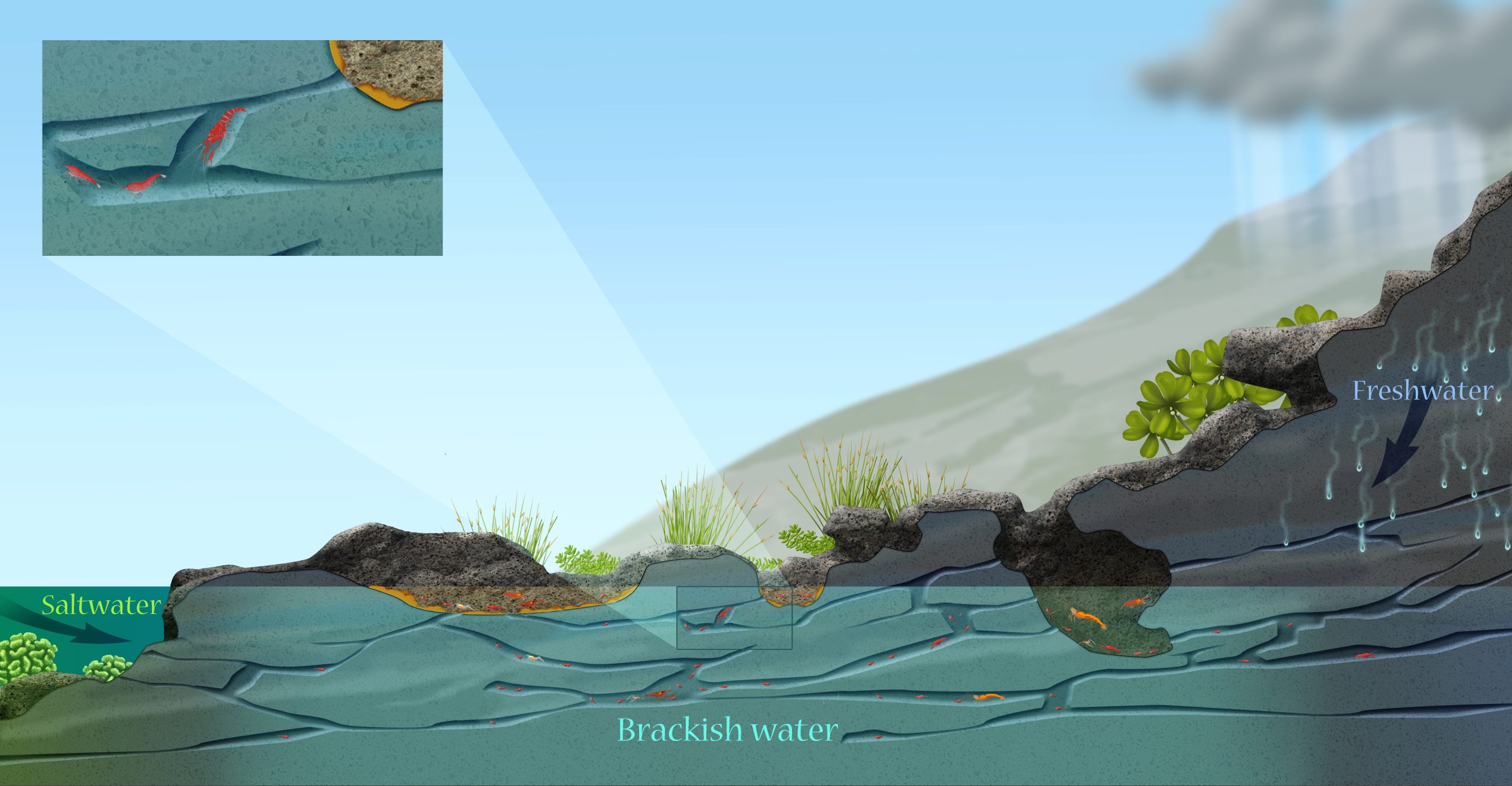
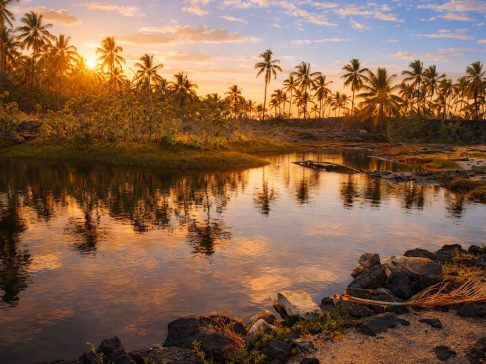
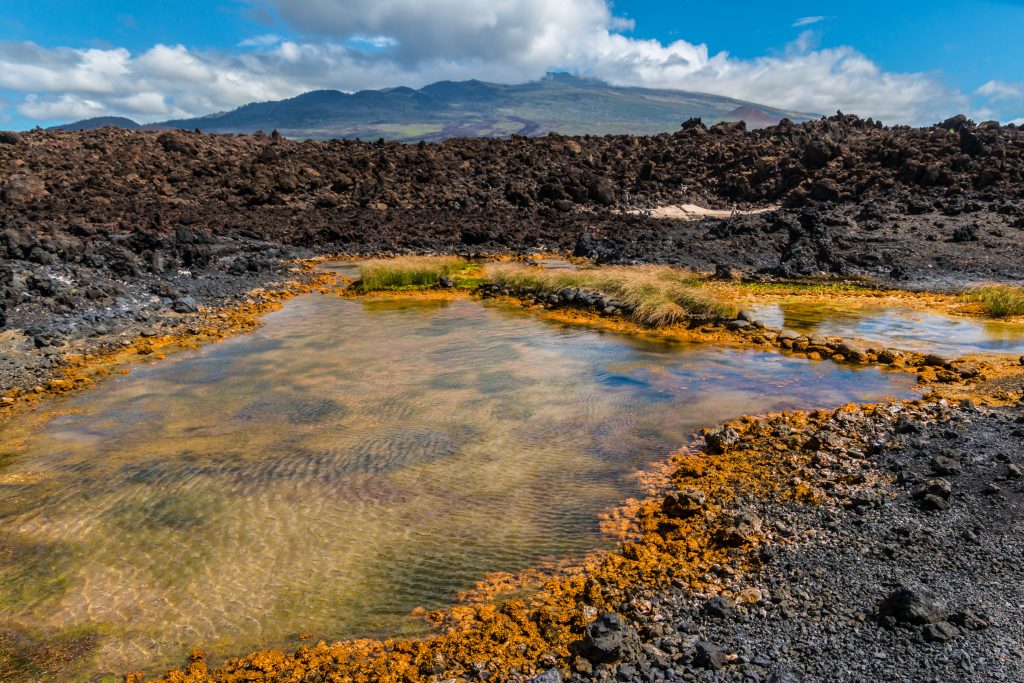
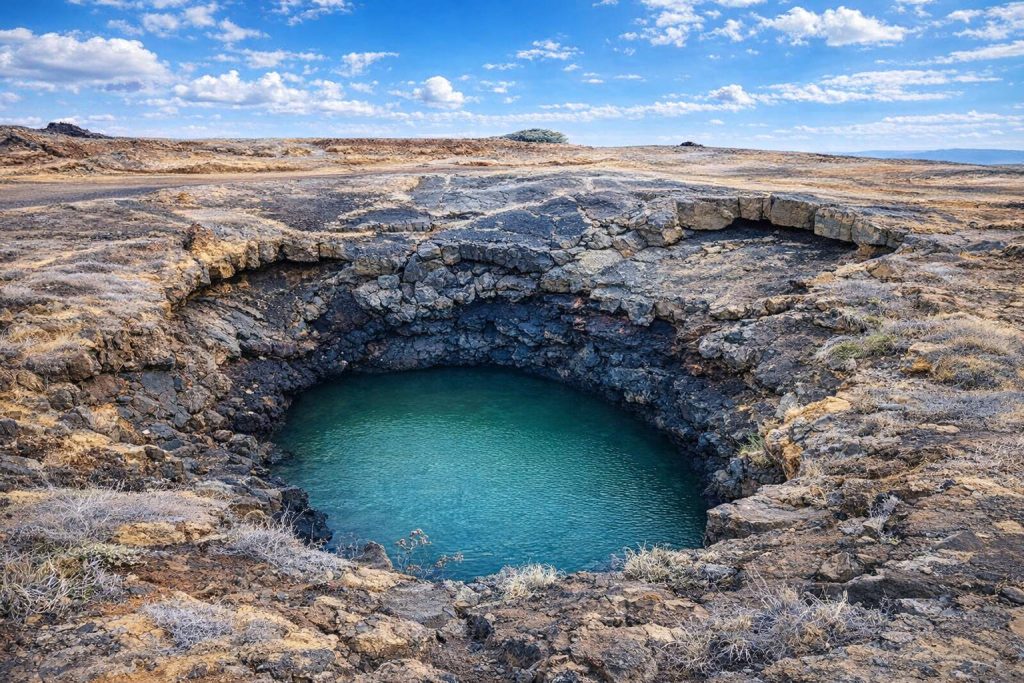
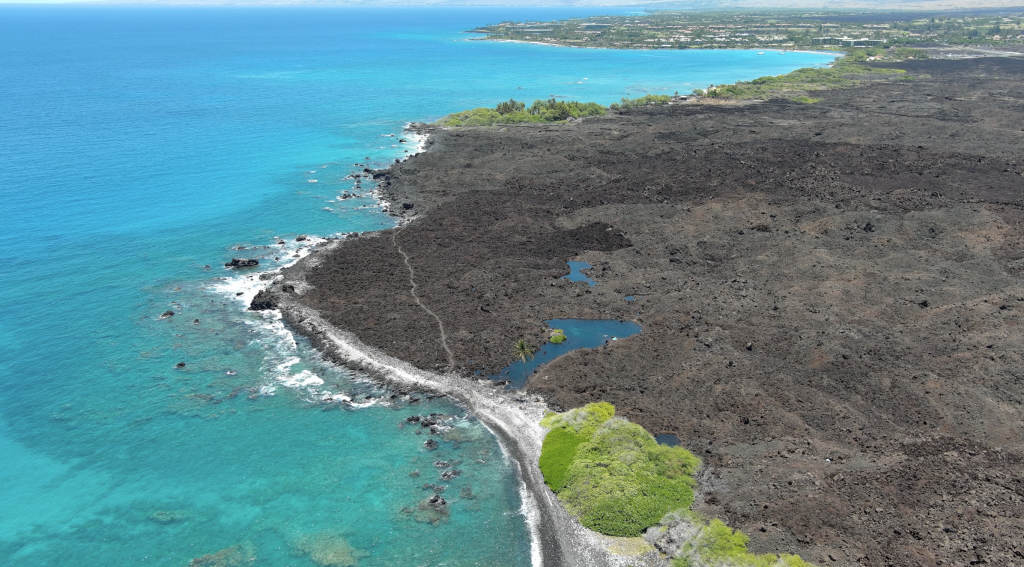
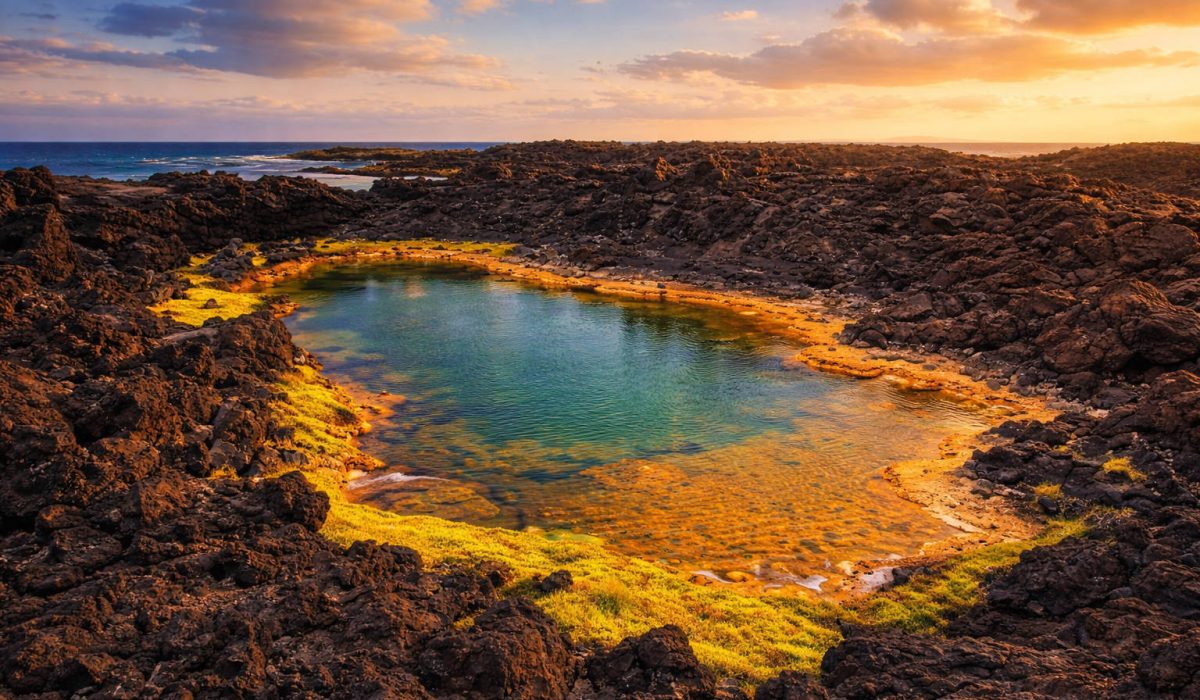
Anchialine pools are small, brackish water habitats found near the coast. They look like isolated ponds, but they are connected underground to each other (a complex subterranean estuary) and to the ocean through porous rock and groundwater. This unique connection means they rise and fall with the tides—even though they have no visible link to the sea.
The word anchialine comes from Greek, meaning “near the sea”. In Hawai‘i, these pools are known as wai ‘ōpae, loko wai kai, or loko ‘ōpae ‘ula.
How Anchialine Pools form
Freshwater from rainfall flows underground through porous volcanic rock, where it mixes with seawater beneath the surface. This underground mixing creates brackish water conditions that support specialized native species, including ʻōpae ʻula shrimp.
Why Are They Special?
- Hawai‘i has one of the highest concentrations of anchialine pools in the world, with about 700 habitats across the islands.
- These pools occur in lava fields, caves, old lava tubes, and limestone areas.
- They are home to rare and endemic species—plants, animals, and microbes found nowhere else.
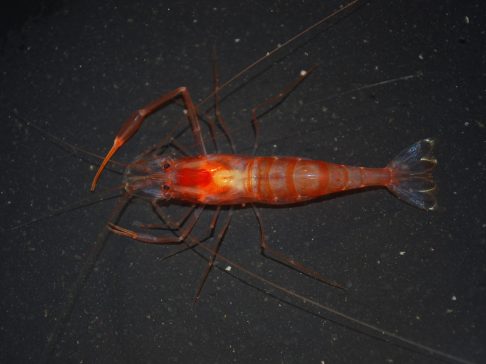
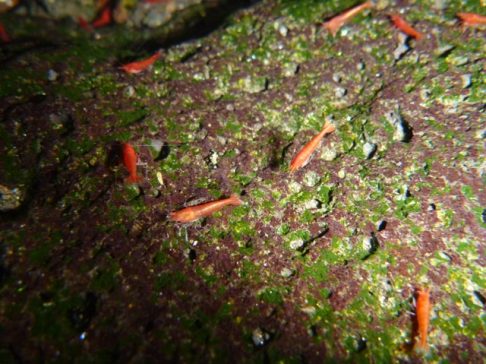
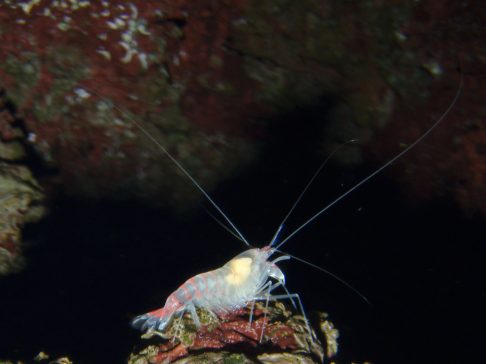
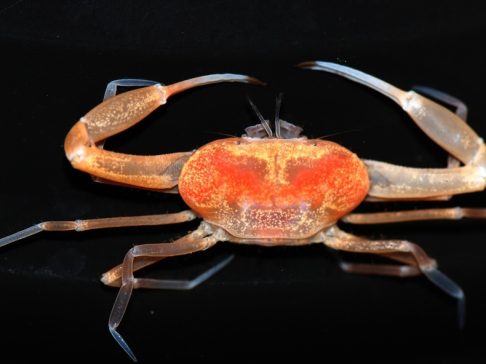
The most famous resident is ‘ōpae ‘ula (Halocaridina rubra), Hawai‘i’s official state shrimp. These tiny red shrimp can live for over 20 years and help keep the ecosystem healthy by grazing on algae.
These fragile habitats face growing threats from sea-level rise, coastal development, and invasive species—from guppies to non-native grasses—that degrade water quality and accelerate pool decline.
Cultural Significance
Anchialine pools and fauna are deeply rooted in Hawaiian history and culture. They are featured in numerous place names and mo‘olelo. For centuries, they provided:
- Fresh water in dry coastal regions
- Aquaculture for food
- ‘Ōpae ‘ula as bait for traditional ‘ōpelu fishing (Observed in North Kona)
- Sites tied to Hawaiian royalty and community life
What Can We Do?
Anchialine pools are fascinating and fragile ecosystems, and an essential component of coastal ecosystems in Hawai‘i. These unique habitats are rare worldwide but relatively common here, especially on Hawai‘i Island. Unfortunately, they face threats from development, pollution, invasive species, and climate change. Preserving these habitats means protecting biodiversity, cultural heritage, and the natural beauty of Hawai‘i.
- Invasive species prevention: Do not introduce non-native fish, invertebrates, or plants to anchialine pools
- Curb pollution: Do not litter, pollute, or use anchialine pools as swimming holes or latrines
- Spread the word: raising awareness is a powerful tool for protection
Learn More: Hawaiian Anchialine Pools
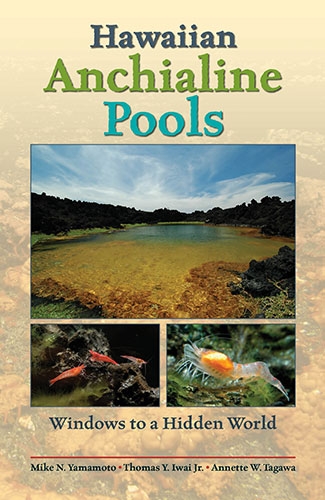
Hawaiʻi’s anchialine pools are rare coastal ecosystems found in only a few places on Earth. Hawaiian Anchialine Pools: Windows to a Hidden World offers a fascinating, accessible look at these unique habitats—exploring their geology, native species, and cultural significance. This richly illustrated book is a great resource for educators, students, and anyone wanting to better understand and appreciate these hidden freshwater–saltwater systems.
Learn more or view the book at Mutual Publishing